
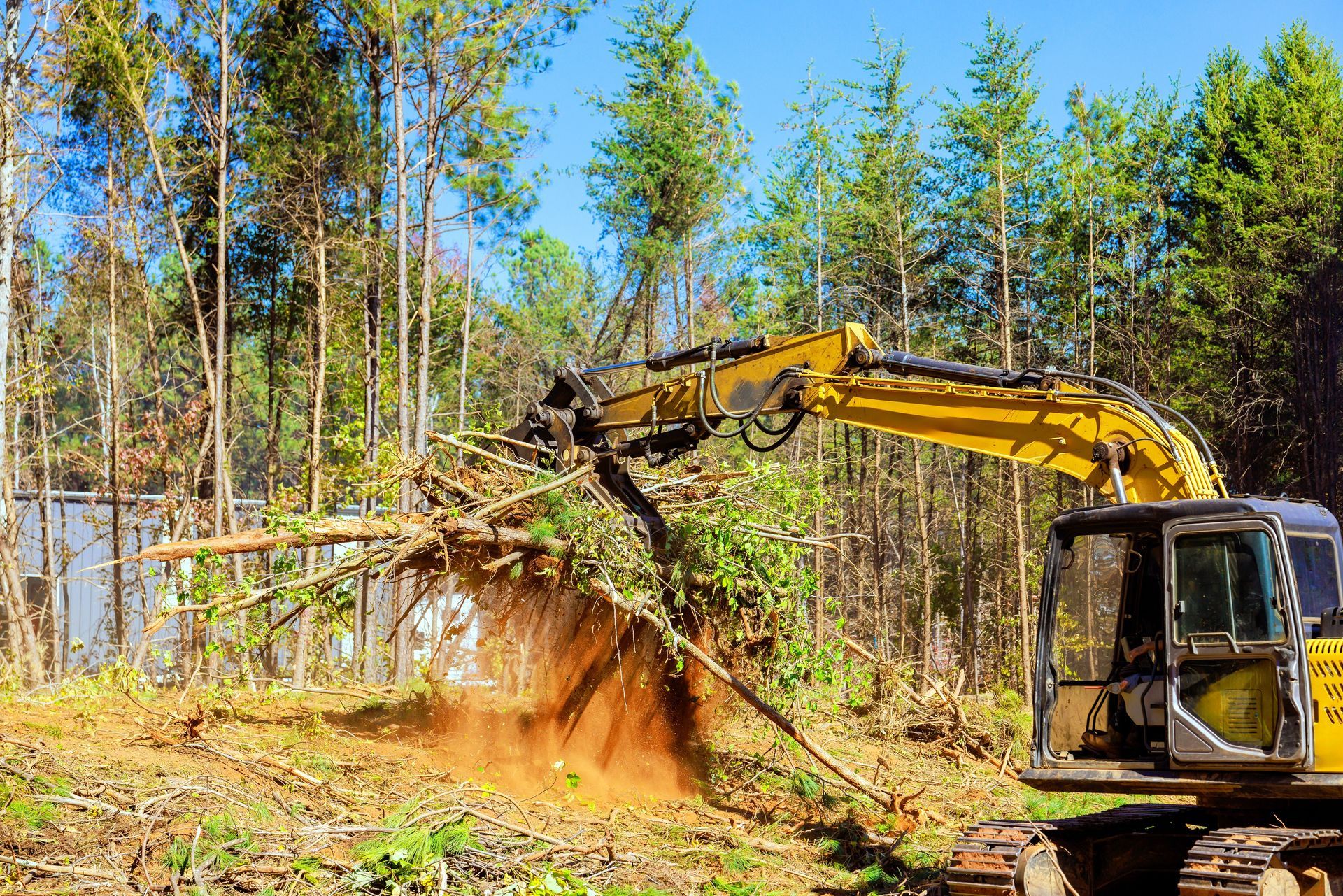
Full Parcels Cleared Without Crew Delays
Land Clearing in Carlinville for residential lots, agricultural parcels, and rural properties where overgrowth prevents intended land use
Wet bottomland and clay soils across Macoupin County mean ground conditions dictate when and how clearing equipment can mobilize without causing soil compaction that interferes with future seeding, construction, or drainage work. Waggoner Brush Ops runs land clearing on full parcels using a Cat 255 XPS with an HM316 mulching head, operating as a single-machine, owner-operated setup that processes vegetation on-site without the coordination delays, multi-crew scheduling gaps, and ground damage that larger clearing operations cause. North Carlinville residential edges, Chesterfield agricultural parcels, and Medora rural properties use this method when they need vegetation removed quickly and the land left ready for its next use without debris piles or compacted access routes complicating the transition.
One machine and one operator mean clearing decisions happen in the field without waiting for crew supervisors to relay instructions or coordinate between dozer operators, haul-off trucks, and cleanup phases. The mulching head processes material where it stands, so the site looks finished when the equipment leaves rather than staged for follow-up work scheduled weeks later.
Schedule a site visit to review clearing zones, drainage considerations, and equipment staging logistics.
Why Single-Machine Clearing Reduces Ground Damage
The Cat 255 XPS distributes weight across wide tracks and processes vegetation without requiring support vehicles, staging areas, or multiple equipment passes that compact soil and create ruts in wet conditions. The HM316 mulching head grinds material at ground level and spreads mulch evenly, so topsoil stays in place and the cleared parcel drains naturally rather than pooling in low spots where dozer blades scraped too deep or haul-off trucks tracked through during wet weather.
Once clearing finishes, you see leveled ground with no burn piles waiting for permits, no windrows of pushed material blocking drainage swales, and no access ruts requiring fill and grading before construction or seeding can begin. The mulch layer settles into a mat that suppresses regrowth and breaks down over the next growing season, leaving organic matter in the topsoil instead of bare ground exposed to erosion.
Owner-operated accountability means the equipment operator knows the clearing plan, the intended land use, and the drainage priorities before mobilization, so adjustments to mulch depth, canopy retention, and clearing boundaries happen immediately rather than flagged for correction after a crew moves to the next job. Faster mobilization and fewer phases mean the parcel transitions from overgrown to ready-for-use in days rather than weeks.
Common Questions Before Clearing Projects Start
Rural and residential properties across Central Illinois face similar overgrowth challenges, and most landowners need clarity on how land clearing unfolds and what condition the site will be in when equipment demobilizes.
What size parcel can the Cat 255 XPS clear in a single mobilization?
The mulching head processes parcels ranging from small residential lots to multi-acre agricultural tracts, with clearing speed determined by vegetation density, terrain slope, and whether drainage features or tree lines require preservation during the work.
How does owner-operated clearing differ from crews running multiple machines?
One operator makes all clearing decisions in real time without coordinating between dozer operators, haul-off drivers, and cleanup crews, which eliminates scheduling gaps, miscommunication about clearing depth, and the debris staging errors that require follow-up visits to correct.
When is the best time to clear land in Carlinville if soil conditions affect equipment access?
Late summer and early fall provide the driest ground conditions for tracked equipment, while winter clearing is possible on frozen ground but limits immediate seeding or construction work until soil temperatures rise and frost risk passes in spring.
What happens to stumps during the land clearing process?
Stumps are ground flush with the surface during the mulching pass, leaving no protruding wood that interferes with mowing or equipment movement, though below-grade stump grinding is available separately if construction footings, concrete pads, or driveway placement requires deeper removal.
How much follow-up work should I expect after the clearing pass finishes?
None—the mulching head processes material completely during the initial pass, leaving no debris piles to burn or haul and no staged material requiring cleanup coordination, so the parcel is ready for seeding, grading, or construction staging immediately after the Cat 255 XPS demobilizes.
Waggoner Brush Ops clears land for property owners who need lean, accountable operations and owner-operated precision, not large clearing crews that leave coordination gaps and compacted ground behind. Request a parcel evaluation to confirm clearing priorities and equipment access requirements.